How to Make Tires Last Longer
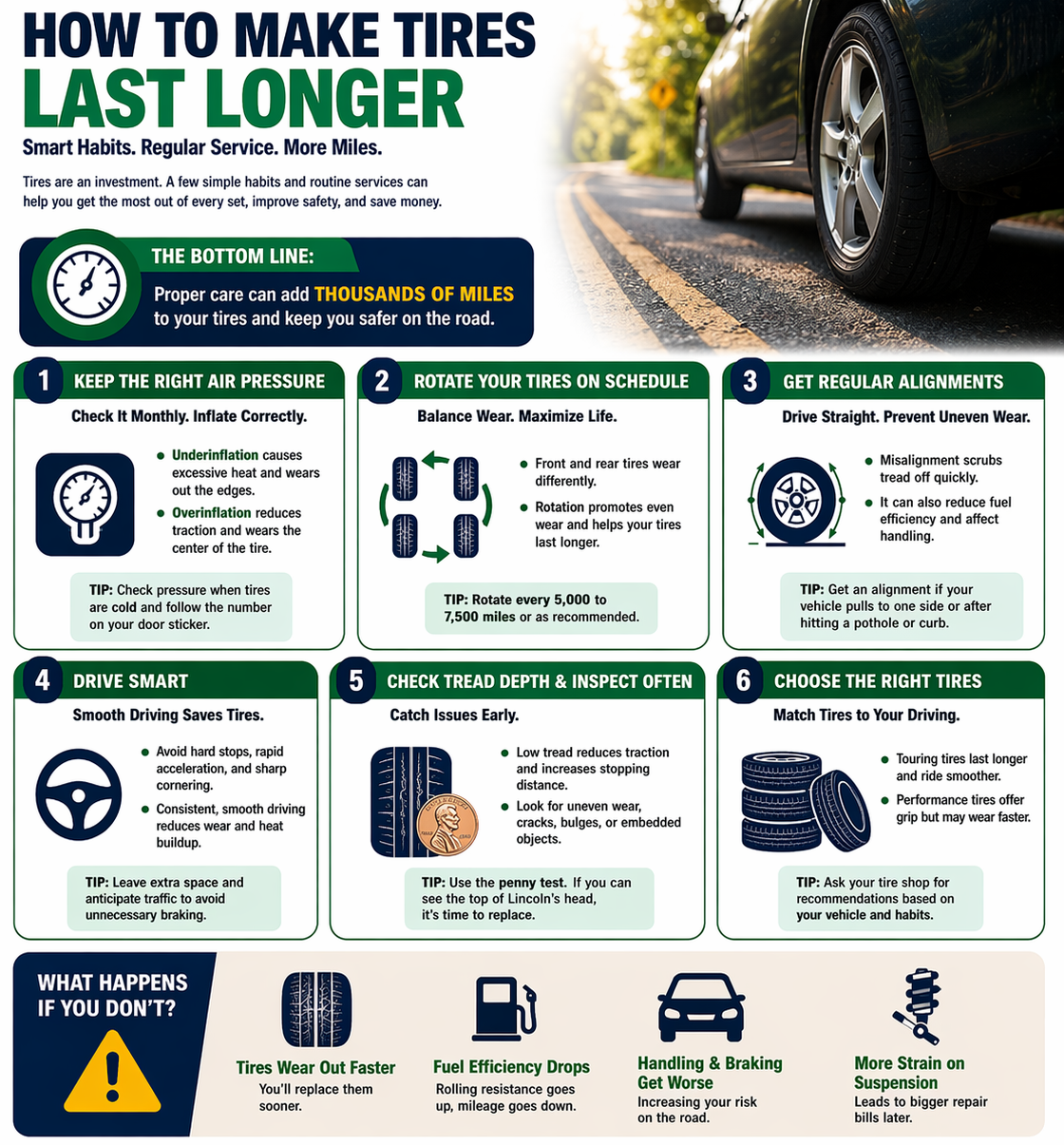
Tires are one of the most expensive wear items on your vehicle, and one of the most overlooked when it comes to preventive maintenance. If you’re asking how to make tires last longer, you’re already thinking the right way. Tire longevity isn’t about luck; it’s about disciplined maintenance, proper driving habits, and catching small issues before they become expensive problems.
At Rick’s Tire & Auto Service in Irving, TX, extending tire life isn’t guesswork. It’s a combination of precise service intervals, correct vehicle setup, and real-world driving awareness. Here’s what actually makes a difference.
Maintain Proper Tire Pressure (This Is Non-Negotiable)
Improper tire pressure is the fastest way to destroy a set of tires.
- Underinflation causes excessive sidewall flex, heat buildup, and premature edge wear.
- Overinflation reduces the contact patch, leading to center tread wear and reduced traction.
Check pressure at least once a month, and always when tires are cold. Don’t rely on visual inspection; modern tires can look fine even when significantly underinflated.
Technical insight: Even a 5-10 PSI deviation can reduce tire life by thousands of miles.
Stick to a Tire Rotation Schedule
Tires do not wear evenly. Front tires handle steering and braking forces, while the rear tires follow, resulting in significantly different wear patterns.
- Rotate every 5,000 to 7,500 miles (often aligned with your oil change).
- Follow the correct rotation pattern based on the drivetrain (FWD, RWD, AWD).
Skipping rotations guarantees uneven wear, and once that happens, you can’t reverse it.
At a professional tire shop, rotations are fast, inexpensive, and one of the highest ROI services you can perform.
Keep Your Wheels Properly Aligned
Wheel alignment is one of the most misunderstood contributors to tire life. If your alignment is off, your tires are literally being dragged across the road at an angle. That leads to:
- Rapid inner or outer tread wear
- Steering instability
- Reduced fuel efficiency
Warning signs:
- Vehicle pulling left or right
- Crooked steering wheel when driving straight
- Uneven tread wear patterns
Even minor misalignment can cut tire life by 20-30%. That’s a loss of hundreds of dollars.
Balance Your Tires Regularly
Tire balancing ensures even weight distribution across the wheel and tire assembly. When tires are out of balance:
- You’ll feel vibrations (especially at highway speeds).
- Tread wear becomes inconsistent.
- Suspension components take unnecessary stress.
Balancing is typically done:
- When installing new tires
- During rotations (if needed)
- When vibration is detected
Ignoring balance issues accelerates wear and compromises ride quality.
Drive Like Tire Life Matters (Because It Does)
Your driving habits directly affect how long your tires last. What shortens tire life:
- Hard acceleration
- Aggressive braking
- Fast cornering
- Hitting potholes or curbs
What extends it:
- Smooth throttle input
- Gradual braking
- Avoiding road hazards whenever possible
Urban driving (as many drivers experience around Irving) naturally wears tires faster due to stop-and-go conditions. That makes maintenance even more important.
Don’t Ignore Suspension and Brake Issues
Tires don’t operate in isolation. If your suspension or braking system is compromised, your tires will pay the price.
Worn components like:
- Shocks and struts
- Ball joints
- Control arms
Can cause uneven tire contact with the road, leading to irregular wear patterns.
Similarly, brake issues (like sticking calipers) can cause excessive heat and localized wear.
If you’re already visiting for auto repair, it makes sense to have a full inspection done. Tire wear is often a symptom of a deeper mechanical issue.
Keep Up With Routine Maintenance
It might not seem obvious, but services like:
- Oil change
- Car AC repair
- Engine diagnostics
All contribute indirectly to tire longevity.
Here’s why: A well-maintained vehicle runs smoother, distributes weight properly, and avoids unnecessary strain on tires. Neglecting general maintenance often leads to performance issues that translate into uneven wear.
A full-service auto repair facility ensures everything works together, not just your tires.
Choose the Right Tires for Your Vehicle
Not all tires are built the same. Factors that impact lifespan:
- Treadwear rating
- Driving conditions (highway vs. city vs. off-road)
- Climate
Premium brands like Michelin, Goodyear, and Continental often deliver longer tread life, but only if properly maintained.
At Rick’s Tire & Auto Service, we help you select the tires that best match your driving habits and vehicle requirements.
Inspect Your Tires Regularly
Don’t wait for a problem, look for it. Check for:
- Uneven wear patterns
- Cracks or dry rot
- Embedded debris
- Low tread depth
Use the penny test or a tread depth gauge. If tread depth drops below 2/32 inch, the tire is no longer safe, regardless of how it looks.
Work With a Professional Tire Shop
DIY maintenance helps, but it only goes so far. A professional tire shop provides:
- Precision alignment equipment
- Accurate balancing machines
- Expert inspections
- Access to high-quality replacement tires
At Rick’s Tire & Auto Service, ASE-certified technicians take a systems-level approach. That means they don’t just install tires; they ensure your entire vehicle supports long-term tire performance.
Ready to Get More Miles Out of Your Tires?
Whether you need a rotation, alignment, or a full inspection, Rick’s Tire & Auto Service in Irving, TX, has the tools and expertise to help you maximize tire performance and protect your investment.
Book your service today and keep your tires (and your vehicle) running at their best.